Showing posts with label Britpop. Show all posts

Friday, 3 November 2017

ARTIST VID #4 - We Are The Pigs

POSSIBLE POINTS OF INFLUENCE
  • Screens within screens
  • Filming at a rubbish tip

TRACK: We Are The Pigs
ALBUM: Dog Man Star
YEAR: 1994
GENRE: Art rock, glam rock
DIRECTOR: David and Raphael Vital-Durand
LABEL: Nude Records
SINGLE?: Yes, first.


BACKGROUND/CONTEXT

  • A shift away from Britpop
  • Bernard Butler had left the band, so it's suitable none of the other members perform in the video, as they won't either in the next one
  • So this is the first appearance of Richard Oakes


PERFORMANCE, NARRATIVE OR CONCEPT?


EXTRA SOUND:
Very easy to miss, they play a split-second of the previous released single, Stay Together while on black. 
The end of the song: "We all watch them burn" is cut off earlier.

TITLES:
No titles. 

NARRATIVE ENIGMA:
The ominous figures at the beginning, kept unclear through the lighting and smoke.

RELATIONSHIP BETWEEN LYRICS AND VISUALS:
"Police cars on fire" - Later we see this multiple times.

RELATIONSHIP BETWEEN SOUND AND VISUALS:
The darker sound in the album is reflected in this video, more than later videos.

GENRE SIGNIFIERS:
The band aren't glamorized, typical indie.
Through the intertextual referance to 1984 you have a simulacrum of the dystopian/post-apocalyptic genre, although this could still be apocalyptic as the carnage is going on right now.

INTERTEXTUAL REFERENCES:
Reference to Nineteen Eighty Four film through the screens.

OTHER NARRATIVE THEORY:
TODOROV
All classic dystopias represent, so the equilibrium can never be restored, the restoration ultimately is a tragic ending like the death of Winston Smith in Nineteen Eighty-Four.

LEVI-STRAUSS BINARY OPPOSITION
The vandals and their victims

KATE DOMAILLE'S 8 NARRATIVE TYPES
4. The chase between the spider and the fly, we see the spiders mainly here, actually chasing like mobs.

BRANDING:
Continuous use of the black leather for the band's look.
The fire was used during the live performances.

REPRESENTATION:
GENDER: The perputrayers of the dystopia are male, males as the more violent.

SEXUALITY: Very little representation of sexuality

REGIONAL IDENTITY: Set in London, Suede is still quite metropolitan despite being outsiders in the Britpop era.


AUDIENCE REPRESENTED/TARGETED:
Arthouse characteristics as was the whole theme of the album.


Thursday, 2 November 2017

AUDIENCE RESEARCH - Suede's Original Audience

POSSIBLE INFLUENCES:
  • So far I've been wanting to at least try and recreate the dystopian image Suede had for Dog Man Star of a decayed London/England, but if I can't, then it doesn't matter whether they look particularly German or Luxembourgish 
  • This an example going against American Imperialism? (MANGeR pack)


After finding out that Suede had enjoyed some commercial success in Sweden and Finland (well of course they are pronounced SSWADE), I decided to ask a Swedish student in the Year below me whether his parents knew the band.

SWEDISH, 40s to 50s, now live in Luxembourg 
I managed to speak to his mother and got some insight into how she sees they were peceived The mother of a student in the Year below, from Sweden, teenager in the 80s
  • It was mainly 20-25s
  • They were 
  • No difference in sexuality, the androgynous image of Brett Anderson didn't steer them in one audience segment 
  • "They were cool"
TWO TEACHERS 
Both were teens/20s somethings in the 90s
Mr Shaw and Mr.Teale,
Mrs Shaw didn't recognize my chosen track, but immediately noticed: "Of Course, I was part of the Britpop generation"
Mr Teale didn't reconze the track at first, but as soon as he heard Brett Anderson's vocals he recognized it was Suede.
Connects Good Times at Uni with Britpop.

MY FELLOW STUDENTS, INTERNATIONAL
Ruslan, Russian-Luxembourgish
James, grew up in London, lived in Luxembourg, one album in their car
Ethan, lived in India and Luxembourg for most of his life, nows of them, nut mainly through a teacher playing them 


In 1997 in Düsseldorf, Brett Anderson saying, in usual rebellious spirit (also rejecting Britpop). (+ this is on ARD, Germany's main public broadcaster equivalent of the BBC. shows they were held in a similar regard, though I can't find any ARD interviews now, more so ARTE, which is a more upmarket, arthouse station than the public broadcasters in Germany)

I think of one the successes of the band is we're pretty successful outside Great Britain as well. I think there's a lot of of British bands who are quite snobbish where they direct their audience...we tend to sell a lot more records outside the UK than lots of British acts, which is good. 'Cause I've always seen us as a European band rather than a British band.
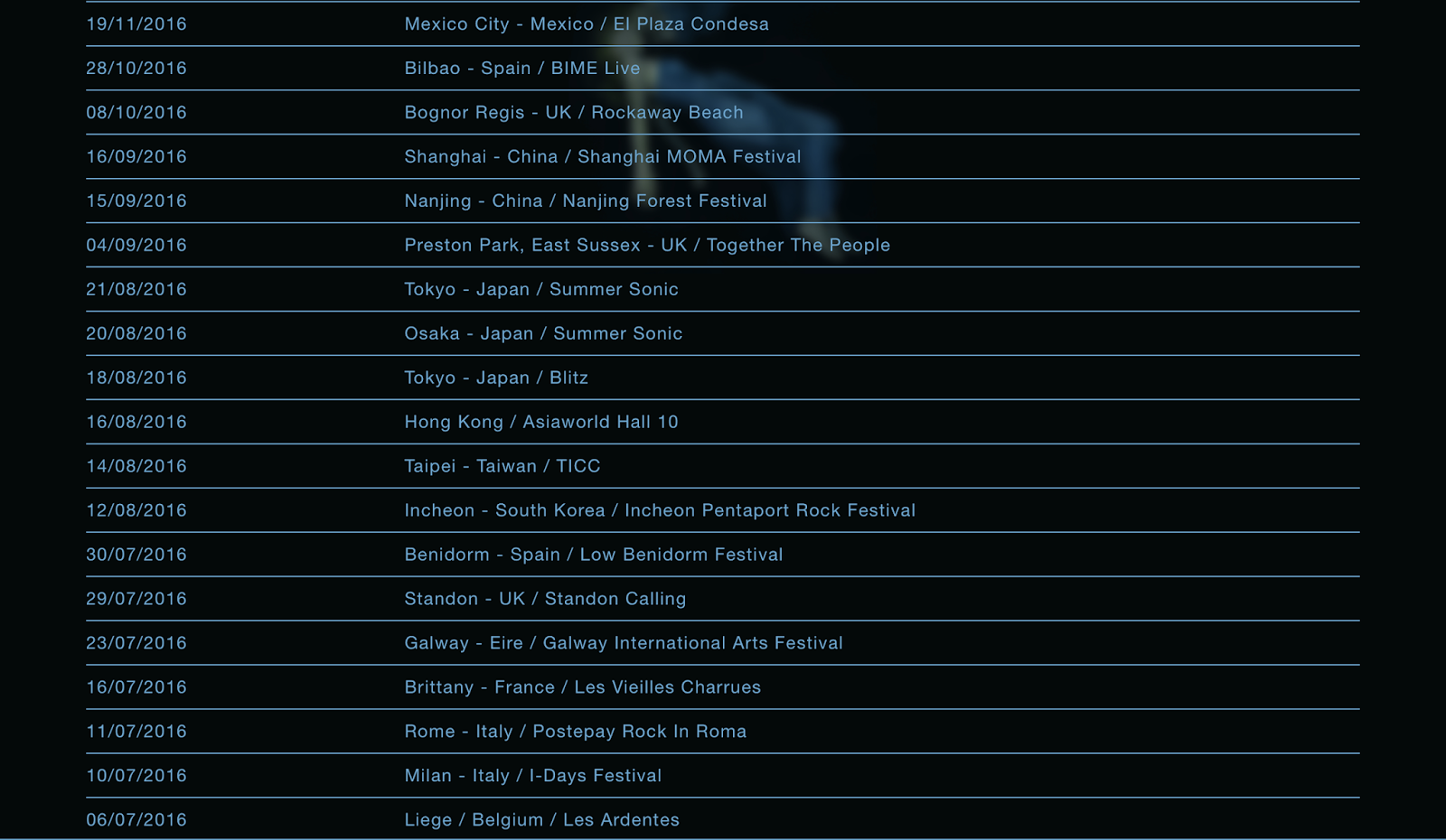
Not just European, but other countries such as China, Japan, Mexico, Taiwan as the touring information on their website shows: 


Some reviews of their autobiography:
Suede remain one of my favourite bands. I remember vividly their appearance at the Brits (which at the time was still a cosy back slapping corporate event). I've seen them 3 times: I saw them on the Dog Man Star tour (which introduced their new guitarist Richard Oakes) and was lucky enough to see their comeback gig at the Royal Albert Hall. It's the best gig I've ever attended, there was so much love in the room for them that night which considering they'd almost become the forgotten band of the 'britpop' era was immensely gratifying. I also saw them at Brixton when they played 'Coming Up' in its entirety - another excellent gig. This is several levels up from the normal 'cut and paste' Music Biography. The author was a fan/friend/employee of Suede. It's a reissue of a previous book, but instead of undertaking a rewrite the author uses footnotes to add new thoughts & views to the narrative. This actually works quite well. It's certainly not a white wash, it doesn't stint on either the drugs nor the arguments. The band were great and this book does them justice.

After their debut album they never really managed to be commercially successful in the USA, they are one of the honourable mentions on WatchMojoUK's Top 10 British Bands That Never Broke the UK.

How Suede's sophomore album changed a fan's life:
http://www.nme.com/blogs/nme-blogs/how-dog-man-star-suedes-gothic-monstrosity-changed-my-life-763181

Another heartfelt tribute to Dog Man Star:
By the time “Still Life” gives its last orchestral flourish and fades out into ominous ambient sounds, Suede has dragged you from icy bleakness to a state of longing, an emotion that breaks down to equal parts pain and possibility.
It’s probably unnecessary to explain why this kind of thing would be appealing to a teenager – why Dog Man Star was such a good bad influence on my life at 15 or 16. This is the kind of music that, despite all the wallowing and seclusion, will nudge a person to start living their life. The line “Have you ever tried it that way?” from “Pantomime Horse,” a song off Suede’s first album, becomes a question whose ambiguous-but-not-that-ambiguous meaning will extend to every spectacularly imprudent decision you could make. Still, it’s not like Suede were the only thing pushing me out of the nest. I mean, it’s never just one thing, is it, despite what personal essays about beloved cultural artifacts seem to suggest? Other bands and books and real-life people and something inherently searching in my own personality, I guess, were every bit as important.

CULTURAL
Music used for You Have Been Watching, Channel 4 panel show.

PLAYED IN TV SHOWS
Skins - Beautiful Ones
Luther - She

RESOURCES

Fan websites/forums:
On Brett Anderson:
Neil Codling seems to have a bit of a following, due to hi cuteness

Monday, 30 October 2017

ARTIST RESEARCH - Media Coverage/Appearances

Brett Anderson's own website.


There is some­thing won­der­fully spe­cial about see­ing a white hot young band in the first flush of suc­cess. When Suede made their Ir­ish con­cert de­but on March 27, 1993, they were the most talked about new Bri­tish band since the Stone Roses, and those who at­tended the Tivoli, on Dublin’s Fran­cis Street, that night are un­likely to have for­got­ten the manic in­ten­sity of the then quar­tet’s per­for­mance.
It’s worth re­mem­ber­ing just how hyped Suede were in 1992 and 1993. On the strength of just three sin­gles, they were dubbed “the best band in Bri­tain” by Melody Maker, and they had ap­peared on the cover of 20 mag­a­zines be­fore they had re­leased their de­but al­bum. That self-ti­tled ef­fort, in­ci­den­tally, was re­leased the day be­fore the Tivoli gig and it was justly praised as a mile­stone re­lease.
In fact, Suede would prove to be the fastest sell­ing al­bum in the UK charts since Frankie Goes to Hol­ly­wood’s Wel­come to the Plea­sure­dome al­most a decade be­fore. The strength of those early sin­gles helped whip up a me­dia frenzy, but credit must also go to their pub­li­cist, John Best, who pulled ev­ery string in the PR book to en­sure that Suede were the band on ev­ery­one’s lips. Best also worked with The Cran­ber­ries, then en­joy­ing con­sid­er­able pop­u­lar­ity and what would prove to be short-lived ac­claim for their de­but Ev­ery­body Else Is Do­ing It, So Why Can’t We?
Much of the bril­liance of Suede lay in the ten­sion be­tween the hy­per-lit­er­ate front­man Brett An­der­son and the mar­vel­lous gui­tarist, Bernard But­ler. Com­par­isons with Mor­ris­sey and Marr were lazy, per­haps, but not com­pletely with­out merit. There was a real sense at the time that both young men were push­ing each other to be as good as they could be.And while grunge was in the as­cen­dancy glob­ally, there was some­thing unashamedly English — and Lon­don-cen­tric — about An­der­son’s pre­oc­cu­pa­tions. On the month their de­but al­bum was re­leased, the snake-hipped front­man was on a cover of Se­lect mag­a­zine with a union flag pro­vid­ing the back­drop and a sub-head­line scream­ing “Yanks go home!”It’s some­times cited as the mo­ment Brit­pop was born and al­though Suede didn’t em­body the move­ment in the pub­lic mind in quite the same way Blur and Oa­sis would, they played a fun­da­men­tal part. That was made clear in John Har­ris’s ab­sorb­ing book on Brit­pop, The Last Party — an ac­count that doc­u­mented in fan­tas­tic de­tail the break­down be­tween An­der­son and But­ler.Even in the course of mak­ing Suede, the pair had been at log­ger­heads, with An­der­son said to be an­noyed that pro­ducer Ed Buller ap­peared to see But­ler as the key mem­ber of the group. And there was ac­ri­mony dur­ing the mak­ing of se­cond al­bum Dog Man Star — a work that was cere­bral, overblown, thrilling and mad­den­ing, of­ten in the course of the same song. But­ler de­parted be­fore the al­bum had been com­pleted, for­ever rob­bing the band of the ex­u­ber­ant fris­son that had marked them out from the pack.Even in the course of mak­ing Suede, the pair had been at log­ger­heads, with An­der­son said to be an­noyed that pro­ducer Ed Buller ap­peared to see But­ler as the key mem­ber of the group. And there was ac­ri­mony dur­ing the mak­ing of se­cond al­bum Dog Man Star — a work that was cere­bral, overblown, thrilling and mad­den­ing, of­ten in the course of the same song. But­ler de­parted be­fore the al­bum had been com­pleted, for­ever rob­bing the band of the ex­u­ber­ant fris­son that had marked them out from the pack.And yet, in the then 17-year-old Richard Oakes, An­der­son found a gifted re­place­ment for But­ler, but the young ax­e­man just didn’t have But­ler’s on-stage pres­ence. Still, Oakes was an im­por­tant cog on Com­ing Up, the band’s third, and most com­mer­cial, al­bum to date — and he plays a big part in the suc­cess of the lat­est al­bum, Night Thoughts, which was re­leased last month.And yet, in the then 17-year-old Richard Oakes, An­der­son found a gifted re­place­ment for But­ler, but the young ax­e­man just didn’t have But­ler’s on-stage pres­ence. Still, Oakes was an im­por­tant cog on Com­ing Up, the band’s third, and most com­mer­cial, al­bum to date — and he plays a big part in the suc­cess of the lat­est al­bum, Night Thoughts, which was re­leased last month.The Suede of 2016 is a much more ex­cit­ing prospect than the band who limped from the late 1990s into the early 2000s. Af­ter Com­ing Up, An­der­son et al found them­selves in a cre­ative pickle, seem­ingly con­tent to re­lease by-num­bers mu­sic that sounded like a poor fac­sim­ile of what they had done so well just a few years be­fore. So hack­neyed was the fare on al­bums like 2002’s A New Morn­ing, that the band were in dan­ger of sul­ly­ing the mem­ory of their golden years.Few mourned their de­ci­sion in 2003 to go their sep­a­rate ways. There was fleet­ing ex­cite­ment when An­der­son and But­ler re­con­vened as The Tears, al­though the re­sult­ing al­bum, Here Come the Tears, failed to live up to the sum of their parts. A new gen­er­a­tion had lit­tle in­ter­est in them ei­ther, judg­ing by the ris­i­bly poor turn out for their late night show in Ox­e­gen in 2005. Twelve years on from be­ing rock’s hottest prop­erty and they were fac­ing a few hun­dred peo­ple in a vast tent in Kil­dare. It’s a cau­tion­ary tale for those feted bands who might think the adu­la­tion will last for­ever.Few mourned their de­ci­sion in 2003 to go their sep­a­rate ways. There was fleet­ing ex­cite­ment when An­der­son and But­ler re­con­vened as The Tears, al­though the re­sult­ing al­bum, Here Come the Tears, failed to live up to the sum of their parts. A new gen­er­a­tion had lit­tle in­ter­est in them ei­ther, judg­ing by the ris­i­bly poor turn out for their late night show in Ox­e­gen in 2005. Twelve years on from be­ing rock’s hottest prop­erty and they were fac­ing a few hun­dred peo­ple in a vast tent in Kil­dare. It’s a cau­tion­ary tale for those feted bands who might think the adu­la­tion will last for­ever.There was lit­tle en­thu­si­asm for Suede’s come­back al­bum, Blood­sports, in 2013 — es­pe­cially as it ar­rived just days af­ter An­der­son’s idol, David Bowie, had re­turned with a new al­bum af­ter a near decade-long hia­tus. But Suede’s al­bum was the real deal — packed as it was with blis­ter­ing tunes. The sound of a band re­vi­talised.(Three years later, by grim co­in­cide, the lat­est Suede al­bum, Night Thoughts, ar­rived in the wake of Bowie’s death and, con­se­quently, per­haps didn’t get the at­ten­tion it de­served.)
On Wed­nes­day, An­der­son and friends will show­case the al­bum at Dublin’s Olympia, the venue where they played out of their skins in sup­port of Blood­sports three years ago. Older and wiser, they seem to be liv­ing for the mo­ment if re­cent in­ter­views with An­der­son is any­thing to go by. And good luck to them.
It’s hard to know if Twit­ter is a fair barom­e­ter, but if it is the mak­ers of Re­bel­lion might want to go into hid­ing. Eipic, TG4’s 1916-themed mu­si­cal drama aimed at teens (it be­gan broad­cast­ing this week), seeks to tell the story in a con­tem­po­rary set­ting and em­ploy­ing mu­sic from the likes of LCD Soundsys­tem, Fu­ture Is­lands and FKA Twigs — but per­formed as Gaeilge by the cast. It’s a novel idea and an op­por­tu­nity to hear some great songs very dif­fer­ently. “With Eipic,” says pro­ducer Paddy Hayes, “the mu­sic is al­most like a Tro­jan horse. You get them in through that and they’ll stay.”

PRESS

THE GUARDIAN

Music Video being released
https://www.theguardian.com/music/musicblog/2016/jan/13/suede-see-their-new-video-for-pale-snow

with Brett Anderson:

https://www.theguardian.com/music/2013/feb/24/soundtrack-of-life-brett-anderson
https://www.theguardian.com/music/2016/jan/14/suedes-brett-anderson-theres-a-balance-between-sounding-like-yourself-and-not-being-a-self-parody

You can find all of Brett Anderson's contributions to The Guardian here.


REVIEWS OF ALBUMS:
https://www.theguardian.com/theobserver/2002/sep/15/featuresreview.review3


THE TIMES

Articles by Stephen Dalton (Alexandra Palace, Albert Hall)


THE TELEGRAPH

Positive reception to their comeback 

THE DAILY MAIL

Positive rating, 4 out of 5 stars:
Suede’s youthful provocations, Animal Nitrate, Metal Mickey, So Young, crackle with frenzied energy and still sound remarkably cool and contemporary. Following singalong acoustic renditions of This Time and Everything Will Flow, a closing New Generation, from 1994’s brooding Dog Man Star, captures the blend of nostalgia and futurism that always defined Suede – and which, remarkably, appears to be more effective than ever.

THE SUN

MAGAZINES

NME

Brett talks about a long relationship with NME.


PITCHFORK

Review on their 2010 comeback compilation album:
https://pitchfork.com/reviews/albums/14853-the-best-of-suede/


BOOKS 

Soon to publish memoir: 
http://www.nme.com/news/music/suede-brett-anderson-memoir-2018293

To be published in March 2018, already available for pre-ordering:

https://www.amazon.co.uk/Coal-Black-Mornings-Brett-Anderson/dp/1408710501


SOCIAL MEDIA

Fake twitter account:
Of all the fake celebrity Twitter accounts that have sprung up in recent years, fewer have been more amusing than the mock ramblings of Suede singer Brett Anderson. Referring to himself in the third person, @reallybanderson is the archetypal bitchy, rich rock star who is as dismissive of his band mates as he is sure of his own brilliance. A typical tweet reads: “It’s not every day you ride a stallion around Notting Hill, smoking fags and wearing Gucci shoes. Not unless you’re Brett Anderson.” As with all good parodies, it sails close to the wind. It is therefore of some relief when the real Brett Anderson arrives at our Notting Hill rendezvous neither on a horse, nor reeking of cigarettes, nor sporting Italian loafers. The 46-year-old says he “loves” the fake account. “The only thing that bothers me is when people think it’s actually me,” he laughs. While he says that the person he really is couldn’t be further from the man portrayed, he concedes that the bogus account has taken his public persona and “extremified” it.
...


Wednesday, 18 October 2017

ARTIST VID #5: New Generation

POSSIBLE POINTS OF INFLUENCE:
  • The train station at the beginning looks so like the Trier Süd station, it’s like I’m meant to add it in my video.

Need to maybe make sure, takes away some ambiguity 


TRACK: New Generation
ALBUM: Dog Man Star (second studio album)
YEAR: 1995
DIRECTOR: Richard Heslop
GENRE: Britpop
SINGLE?: Yes, third single, released three months after the album


CONTEXT/BAND’S CURRENT SITUATION
  • With their second album Suede took a more darker and melancholic art rock direction, with singles We Are The Pigs and Wild Ones cementing this
  • This track could be said to have a more pop-friendly tune to it

PERFORMANCE, NARRATIVE OR CONCEPT?:
A concept with Suede performing within one of the locations, cross-cutting outside. The storyline features the band singing in a location where there are multiple children, the “New Generation”.

ENJOY THE SILENCE:
The first shot of a train station which lasts three seconds is played on silent, the final 20 seconds are also on silence, which is longer than the silence of the track.


RELATIONSHIP BETWEEN LYRICS + VISUALS:

A new generation, features children.

INTERTEXTUALITY:
Within the world of the album:
These children could be the ones who sing: "We all watch them burn 

BRANDING:

The image at the end of Suede is zooming out a picture of a child and then white.