Showing posts with label audience theory. Show all posts

Monday, 15 January 2018

WEBSITE PLANNING - Social Media Ideas

TEASING THE VIDEO:
  • Filming from the music video
  • Shot of the script front page (tease) 
  • Meeting in the office 
  • Maintaining a balance between exposition but also keeping narrative enigma, make the audience wanting more  
  • Teasing the music video by showing Shots like the protagonist with her back to the audience, who is this character? 

OTHER ACTIVITY:
- Quotes from Philosophers, etc. (like Britney Spears about Nietzsche) 
- Vinyl In Hand (Taylor Swift 1989)
- Listening to music they like (Halsey
- Wishing other stars happy birthday
- Talking about other art they like (films, TV)
- Clues for the video
- Tease the new songs by showing some of the lyrics, while using the cut-up technique 
- Reference lyrics by asking them as a question by the band, like where to go out as Kraftklub did here with Zwei Dosen Sprite.

UPDATE WITH CHOSEN ARTIST
IDEAS WITH SUEDE SPECIFICALLY IN MIND
  • Fake rehearsal of choreography for the live tour, Diamond Dogs-style 
  • Brett Anderson is a very literate/well-read person (signifying a more high art musician some would say), he could show his bookishness by showing himself reading the  book, or a cover of a book. That can thereby widen out the audience, those teenagers who are bookish themselves (again I'm stereotyping audiences, not cool!!!)
THE VIGNETETTES
  • Have 20-30 secs of a location or a character in the dystopian, glam rock world, like Algeria Touchshriek in David Bowie's 1.Outside, extra short clips like Halsey did with Strangers (however explicity saying that it is not a music video)
  • Diary entries
  • Photographs of the Watcher/Stalker

Wednesday, 29 November 2017

MV RESEARCH - Egs of great narrative enigma

Putting on the clothes, reminds me of my AS coursework.


The way the faces are often cut off, we see close-ups of playing the instruments.


Could be useful for the protagonist, the opening shots:


....

Saturday, 18 November 2017

ARTIST RESEARCH - Social Media

Suede have accounts in social media, with the Big 3 Facebook, Twitter and Instagram.

FACEBOOK
Facebook likes:

TWITTER
Twitter followers: 39.4K
Tweets: 1.595

OF THE MEMBERS:
NEIL CODLING


INSTAGRAM
Instagram followers: 14,9K
Posts: 64
They are slightly less active on Insta than Twitter and Facebook, when comparing with contemporary artists like Halsey who posts more or less daily.

EXAMPLES:
Female Gaze? This could be controversial with some older critics who might claim that teenage fans are influenced by this glamorizeation of smoking, that it will influence them, calling in the Hypodermic Needle Theory.


Saturday, 23 September 2017

AUDIENCE THEORY #10 - Subcultural Capital/Pleasures

From: http://a2cw.weebly.com/theory.html


Question I should ask myself:

Is my music promo package targeted at a particular subculture?  
If so, how am I going to address the various demands of this particular subculture, whether in terms of ideological messages or through the ways in which they present their collective identity in terms of behaviourlocation and costume or even in stylistic terms?

If I am going to use the androgynous image that Suede used, then you could argue I am targeting artists and people who dress like that (Grayson Perry) Though in 2017, how far has gender fluidity come into the mainstream, how strong is the hegemony still? Halsey certainly seems to think it has made improvements, talking of a "socially aware narrative".


Grayson Perry on gender identity:


Further reading:

Tuesday, 22 August 2017

AUDIENCE THEORY #9 - Primary + Secondary Audience

When analysing audiences they often fall into two groups, primary and secondary audiences

EXAMPLE

Halsey has an established, loyal following of fans after her successful debut studio album Badlands (Vevo trailer).

As usual there is high anticipation especially after the first album is a surprise success, (and thereby there is huge pressure on the second album), so that will be her primary audience that the album "Hopeless Fountain Kingdom" will be marketed on.

The narrative is based on a film adaptation of Romeo and Juliet. People who here that might watch it due to this intertextual reference of the both the film and the play ,the play having a more a cultural and high art status, it may also be of interest in English Literature at school or university.

However the primary core audience may also share interest in this intertextual reference, as a devoted Halsey fan stated in this Unboxing Video:

I'm a sucker for like literature, and Shakespeare, and plays, and all of that, it just interests me SO MUCH...I just think it's AWESOME. 


Monday, 7 August 2017

AUDIENCE THEORY #8 - Four quadrants

Click here to see my post from my AS coursework blog. where I talked about the four-quadrant theory for films. However is it only applicable to the medium of film? Surely it is the ultimate goal of all media producers to have all audience members, male & female and under & above 25 to consume their texts?

Will have to pay particular attention to the demographics when doing my audience feedback to see if it has been applied to.

AUDIENCE THEORY #7 - Morley

Andrew Goodwin says that Morley in his 1980 book usefully summarises "the problems with the empiristic tradition of audience studies." He goes on to state that the most notorious and debilitating aspect of such studies is of course the failure to analyse meaning systematically"

From this Prezi:


...


Sunday, 6 August 2017

AUDIENCE THEORY #6: Dan Gillmor


I myself have seen how an audience is no longer passive through my feedback, they helped to contribute to the editing process.

Friday, 4 August 2017

DIGIPAK RESEARCH - Clues hidden in album artwork

BARTHES:

"The audience is intrigued by the need to solve a problem"


Massive amount of UGC (fan art)


Thursday, 6 July 2017

AUDIENCE THEORY #5: Uses + Gratifications Theory

Uses + Gratifications Theory is a more active audience theory in direct contrast to the hypodermic syringe model

  1. Diversion
  2. Personal Relationships
  3. Personal Identity or Individual Psychology
  4. Surveillance

Tuesday, 4 July 2017

AUDIENCE THEORY #4: 2-Step Flow

Wiki entry:
says that most people form their opinions under the influence of opinion leaders, who in turn are influenced by the mass media. In contrast to the one-step flow of the hypodermic needle model or magic bullet theory, which holds that people are directly influenced by mass media, according to the two-step flow model, ideas flow from mass media to opinion leaders, and from them to a wider population.
...


...

Sunday, 2 July 2017

AUDIENCE THEORY #3: Hypodermic Syringe Theory

The idea of a passive audience.


EXAMPLE:
Orson Welles's adaptation of HG Wells's sci-fi invasion literary classic War Of The Worlds made some inhabitants think aliens were actually invading.

Wednesday, 21 June 2017

AUDIENCE THEORY #2 - Roland Barthes's 5 Codes

1. The Action Code

2. The Semic Code

3. The Mystery/Enigma Code -
EXAMPLE: A common trait we see is the artist is often not completely shown in the first shot

4. The Cultural Code
EXAMPLE: Psy's Gentleman. The concept of a gentleman is a stereotype well known to especially Western society, Psy is also playing on that, so seeing the countertype of that is playing on our cultural knowledge

5. The Code Of Opposites, going hand in hand with Lèvi-Strauss's binary opposition
EXAMPLE: 

Sunday, 18 June 2017

MUSIC VIDEO THEORY #4: Sven E Carlsson

From his site 
Audiovisual poetry or Commercial Salad of Images?- Perspective on Music Video Analysis  

Music video is a many-faceted multi-discursive phenomenon. Some generally acknowledged "facts" about music video are that ...

i) music videos communicate through TV-screen and TV-speakers  
ii) music videos are a form of low-brow popular culture  
iii) the reception of music videos depends on the beholder (music video may be beautiful or ugly, art or trash, etc.). 

Thursday, 8 June 2017

NARRATIVE THEORY #3 - Intertextuality

Julie Kristeva is a French semiotician.

For example an musical artist will also refer to their own line of work throughout their career, David Bowie did this more and more from the 1990s onwards, for example on the track "You've Been Around he used the recognisable chorus chant "Ch-Ch-Changes"


...


*Insert Spotify embed code*

...


However, there can be more unnoticed forms of intertextuality, as that Ch-Changes is a recognised part of pop culture and (having been covered and used for films such as Shrek 2 and was sung in the cult fantasy horror series Supernatural, it has thereby become one of Barthes's cultural codes)

When is it accidental, when is it intentional? 


When doing the digipak and website I will look to many inspirations from both the artist I have chosen as well as the "look" of other musicians and artists from other mediums.


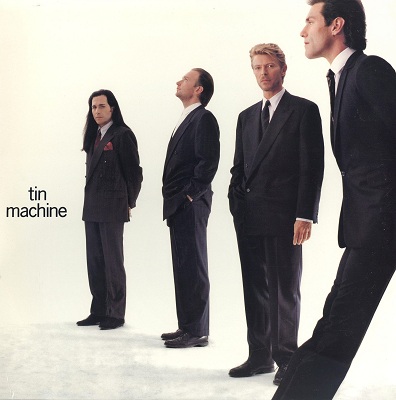
Similiraties between Nirvana's look and Tin Machine, was one stealing from the other? All band members wearing suits isn't the most left-field idea


APPLIED TO MUSIC VIDEO

Is music video the most intertextual medium?
Goodwin's six types of signifiers, linking to simulacra of Baudrillard

Music videos inspired by contemporary art, read here for some examples.


Goodwin later names these as different types of intertextuality within music video:

  • Social Criticism 
  • Self-Reflexive Parody
  • Parody
  • Pastiche
  • Promotion 
  • Homage


SEVEN TYPES OF INTERTEXTUALITY, can these all be applied towards music and the promo package?


CATEGORY I

The TV series The A-Word quoting King Lear but the character knowingly doing that and says it.
This category comprises specific books or texts mediated directly through the author. Revision, translation, quotation, allusion, sources, conventionally understood, an author's earlier work - all belong here. Largely the dynamic consists of authorial reading and remembering, though performances count too (as a kind of reading) and the memory may be subconscious rather than conscious and purposeful. Emrys Jones, for example, well demonstrated the shaping influence of Mystery Play cycles on Shakespeare's histories and tragedies. The evidence for textual transactions in Category I has largely been the identification of verbal iteration or echo (those endless and often disap- pointing lists of parallel passages) though there are verbal possibilities in matching concatenations as well, in lexical or imagistic patterns. There is also non-verbal evidence available in scenic form, rhetorical and stylistic figura- tion, and thematic articulation. 

Type 1: REVISION

...
This type of intertextuality features a close relationship between anterior and posterior texts, wherein the latter takes identity from the former, even as it departs from it. The process occurs under the guiding and explicitly comparative eye of the revising author. The revision may be prompted by external circumstance - censorship, or theatrical, legal, or material exigencies. Alternatively, the revision may simply reflect an author's subsequent wishes. The reviser who is not the author presents another scenario and an entirely different set of problems and considerations. In all cases, however, the transaction is linear, conscious, and specific, marked by evidence of the reviser's preference and intentionality.

Type 2: TRANSLATION

...
Translation transfers, 'carries across', a text into a different language, recreates it anew. The later text explicitly claims the identity of the original, its chief project an etiological journey to itself, or to a version of itself. Translations are generally grouped according to source language, and judged by standards of 'fidelity', i. e., the closeness of the rendering to the original and the success of the translator in representing the original's literary quality and effects.

Type 3: QUOTATION
...
Quotation literally reproduces the anterior text (whole or part) in a later text. (For general purposes of description, we may view textual allusions as a typesof quotation, in effect, quotation without verbal iteration, quotation asreference not re-enactment.) Quotations may be variously marked for reader recognition, by typographical signals, by a switch in language, for example, or by the actual identification of the original author or text:

Type 4: SOURCES
...
Source texts provide plot, character, idea, language, or style to later texts. The author's reading and remembering directs the transaction, which may include complicated strategies of imitatio. The source text in various ways shapes the later text, its content, or its rhetorical style and form.


CATEGORY II

Both of these can be applied to genre potentially
Category II contains traditions. An originary text radiates its presence through numberless intermediaries and indirect routes - through commentaries, adaptations, translations, and reifications in other works. It exists in combina- tion with other originary texts, largely as a set of inherited expectations, reflexes, and strategies. The source remote does not lie far off from the tradi- tions of Category II. But there is a real distinction between the direct influence of, say, a sixth-form Virgil passage, half-remembered many years later, and the indirect influence of traditions, in which the originary text may never have ever been read by the author at all. 

Type 5: CONVENTIONS + CONFIGURATIONS

Poets constantly appropriated and adapted numerous conventions from classical, medieval, and continental literatures, formal and rhetorical. Senecan conventions in tragedy, the chorus, messenger, domina-nutrix dialogue, sticho- mythia, and soliloquy, for example, have all attracted due attention. So have Plautine and Terentian conventions in comedy: eavesdropping, disguise, lock- outs, stock characters like the witty slave, bragging soldier, blocking senex, and so on.

Type 6: GENRE
...
Just like films will often refer to the archetype of a genre like Michael Myer's mask Category II intertextuality also includes the wide range of linkings implicit and explicit in generic choices. These may appear in individual signifiers (e.g., the play-within-the-play of revenge tragedy, the singing shepherds in pastoral), which function much like conventions, or range to broader and less discrete forms. On the far end of the spectrum often a sophistication and smoothness of adaptation makes difficult positive identification of origins.

CATEGORY III

Type 7: PARALOGUES
Can be compared to Barthes's cultural code.

Paralogues are texts that illuminate the intellectual, social, theological, or political meanings in other texts. Unlike texts or even traditions, paralogues move horizontally and analogically in discourses rather than in vertical lineation through the author's mind or intention. Today, critics can adduce any contemporary text in conjunction with another, without bothering at all about verbal echo, or even imprecise lines of filiation. In some ways the discussion of paralogues departs from past critical practices, bringing new free- dom; but, of course, new perils threaten: rampant and irresponsible association, facile cultural generalization, and anecdotal, impressionistic historicizing. Though some would not care to admit it, the practice of adducing paralogues
is not new. E. M. W. Tillyard's citations to Richard Hooker's Laws of Ecclesi- astical Polity and Dionysius the Areopagite's treatise on celestial hierarchies function intertextually as do post-structuralist citations of the hic mulier pamphlets as background to the gender play of early modern literature. The same holds true for modern uses of The Return of Martin Guerre, the rhetoric of Elizabeth or James I, or the documents of colonial discourse, though now moderns tend to see literary texts as contested sites, rather than as self- contained, discursively significant wholes. 

Wednesday, 7 June 2017

AUDIENCE THEORY #1 - Stuart Hall's Reception theory

Stuart Hall was a Jamaican-born Cultural studies lecturer at the Open University, who devised the concepts of there being three ways an audience will decode a media text in connection with what has been encoded by its producers.

Three types of reading:


  • Preferred Reading: The audience understands and/or agrees with the meaning encoded  by the producer(s)
  • Negotiated Reading: The audience partly agrees
  • Oppositional Reading: The audience completely  due to reasons of ideology or lack of knowledge

Example:

Only someone who remembers the lyrics of the song Diamond Dogs:
That Halloween Jack is a real cool cat
can follow the preferred reading when reading the name of this YouTube channel.
Even someone who has heard the song and might not be much of a David Bowie fan might not be able to follow the preferred reading. You could also say that the people who understand it and are not Bowie fans, thereby getting no pleasure from realising the reference, only have a negotiated reading


For example I for a long while enjoyed a TV series called The Thick Of It. However I when I first watched as a child it I didn't know about the two main parties in the UK and what they stood for.

Also a more precise example: 


"I've got a to-do list that's longer than a f***ing Leonhard Cohen song"


Only since last year has the name Leonhard Cohen being, so I can follow the preferred reading now when rewatching it.

Sunday, 4 June 2017

MEDIA LANGUAGE A-Z

SEMIOTICS

Anchorage: When you apply multiple signifiers to make the preferred reading clear.

Binary opposition - Any mutually exclusive pair form a binary opposition such as good/evil, happy/sad.

Connotation - The symbolic meanings of the factual details we denote. E.g. the ancient black and white symbols of bad ad evil, red makes you think of blood

Denotation - Denotation is a description of what we see or hear.

Iconic signs - Iconic signs are where the signifier represents the signified. E.g. A picture.

Indexical signs - Indexical signs are very closely related to the concept they signify. E.g. A tin of catfood signifies the catfood inside.

Intertextuality - Meaning of one text is tied to another, earlier text, e.g. to fully understand the slasher genre you would need to see Psycho which is seen as it's staple film. (term coined by French semiotician Julie Kristeva)


Juxtaposition - When two signifiers that don't fit are placed together we can say that they are juxtaposed.

Narrative Enigma - When information is withheld from the audience.

Polysemic - When a sign is polysemic, it means that it is carrying lots of  meanings at the same time.


Sign - The smallest unit of meaning. Anything that can be used to communicate.

Signifier - A signifier is a single detail that we pick out, which we think has a symbolic meaning, which is then the signified.


Signified - The concept that a signifier refers to.

Symbolic signs (arbitary signs) - Signs that do not have an obvious relationship with the signified, meaning that they can keep changing. E.g. A dove signifying peace.  

Target audience - The audience a text is marketed to, divided . To get a mainstream audience some say you need to fulfill the 4-quadrant model.


MISE-EN-SCÈNE

Body Language: Every movement of the body, whether through arms, legs, or no movement, provides exposition for the characteristics/personality. The actors need to consider the fact that every move their body makes provides meaning that can be decoded by an audience.

Costume: What the actors wear

Casting: When evaluating the acting and the look of an actor playing a character, one has to ask whether he was appropriately cast, or maybe miscast. 

Facial Gestures: The more direct and evident way of actors providing information for the audience.

Hair: Often linked to gender stereotypes, women having long hair and men having short hair, also facial hair is often seen as unhygienic and slightly odd and quirky. 

Lighting: Influences the tone/atmosphere that the audience feel from the text. 

Location: Not in the studio, you have less control of your mise-en-scène than in the studio. Doesn't always have to be outside but mostly is

Make-Up: Also often used as gender stereotypes 

Props: Part of the set which is used by the actors like cutlery, cups, weapons, pens. 

Set Design: Everything surrounding the actors that is not worn by them or used, so like furniture, tables, though their can be some blurring with props say for example a character eventually grabbed a television  and threw it on floor out of anger.

Studio: When you're not filming on location but in studios belonging to the production company. Flats and houses which you would expect to be on location and are, also often with music videos, can be faked. If a production is only filming there and not at all on location it is completely studio-based. This is more or less the opposite of what my AS coursework was, other than the green-screen trip.

CINEMATOGRAPHY

CAMERA SHOTS
Aerial shot (AS) - An aerial shot usually taken from a helicopter, often used at the beginning of a film to establish setting and movement.

Close-up  (CU)- A camera shot taken at a very short distance to show the character's emotion, concentrates the attention and puts the audience in a priviledged position.


Establishing shot (ES) - The first shot of a new scene which is meant to give a general impression rather than specific information.

Extreme close-up (ESU)- A camera shot showing a character's intimate feelings or thinking. This puts the audience in an intimate relationship. It can also be used for dramatic effect.

Long-shot (LS)- A camera shot taken at a relatively great distance from the subject and permitting a broad view of a scene.

Master shot (MAS) - A wide shot that covers the entire action of a scene.

Medium close-up (MCU) - A camera shot focusing on the importance on the emotions and objects but also keeping a sense of the surroundings and action.

Mid-shot (MDS) - A camera shot in which the subject is in the middle distance. This situates the character in an immediate surrounding showing emotions.

Over-the-shoulder shot (OTSS) - A camera shot taken from behind a person looking at someone else. This focuses the audience attention on one character.

Point-of-view shot (POVT) - A camera shot where the audience sees the situation from the character's position and can often be placed in the character's shoes.

Two-shot (2S)- A camera shot of two people framed similarly to a mid-shot; this is often used to provide a comparison between the two characters.

Wide-shot (WS) - A camera shot taken at a great distance which is used to set up a location.


CAMERA ANGLES

Bird's eye view  (BV)- A shot looking directly down on the subject. This can be used to establish an overall shot of a scene or to emphasise the insignificance of the subjects. Very often used for battle scenes.

Dutch angle (DA) - A canted angle also known as the "Dutch angle" is when the camera is tilted. This is usually good for illustrating imbalance, transition or instability. It can also suggest a bizarre environment or psychological state. Effects such as blurring can contribute to this.

Eye level shot - A neutral shot where the camera is positioned as though it is a human observing a scene. The actor's heads are on level with the focus.

High angle  (HA) - A camera shot showing the subject from above. This suggests character's weakness, vulnerability, insignificance or isolation and being looked down upon; the audience is in a powerful position.

Low angle (LA) - A camera shot showing the subject from below. This suggests character's strength, powerfulness or dominance that makes them threatening and being baked up too; the audience is in a weak position.

Rat's eye view (RES) - Often used to show the view of a child or pet. The audience is in a weak position.

Worm's eye view (WEV)- A shot looking up from the ground. This shows strength and dominance and can be used to show the view of a child or pet.


CAMERA MOVEMENTS

Static - When there is absolutely no camera movement.

Crane shot (CS) - A crane shot is achieved by a camera mounted on a platform, which is connected to a mechanical arm that can lift the platform up, bring it down or move it laterally across space.

Hand-held camera - A technique in which a camera is held in the camera operator's hands as opposed to being mounted on a base.

Pan shot - A camera movement technique that involves moving the camera horizontally to the right or left.

Reverse zoom - A reverse zoom is when the camera moves so that the subject appears the same size while the background size changes.


Steadicam - A mechanism for steadying a hand-held camera, consisting of an arm to which the camera is attached to.

Tilt shot - A camera movement technique that involves moving the camera vertically to the right or left.

Tracking shot - A shot in which the camera is mounted on a cart that travels along tracks from side to side.

  Dolly shot  - A shot in which the camera is mounted on a cart which travels towards or   away from the subject.

Zoom - Zooming means altering the focal length of the lens to give the illusion of moving closer to the subject.


CAMERA COMPOSITION:

Deep focus - A camera technique which allows all distance planes to remain clearly in focus, from a close-up range to infinity.

Focus pull - A camera technique where you change focus during a shot. This means adjusting the focus from one subject to another.

Shallow focus - A technique in which one part of the image is in focus while the rest is out of focus.

Framing - This refers to the way a shot is composed and the manner in which subjects and objects are surrounded by the boundaries of the film image.

Rule of thirds - The rule of thirds is when the frame can be divided into three horizontal and three vertical sections and therefore, where the horizontal and vertical lines intersect makes an ideal location for the more important parts of the picture that need to be focused on.


EDITING

Black - When the screen goes black.

Cutting/Match on action - Connecting two shots together in which a character finishes off an action in the second shot that was started in the first shot.

Cross-cutting - A technique where the camera cuts away from one action to another action in order to establish action occurring at the same time in two different places. This is also known as parallel editing and is often used to dramatically build tension and suspense in chase scenes or two compare two different scenes.

Cutaway - A shot that interrupts a continuously-filmed action by briefly inserting another related action, object or person, followed by a cutback to the original shot. This is often used to break up a sequence, ease the transition from one shot to the next, to provide additional information or to hint at an impending change.

Dissolve - A transition effect in which one video clip or image gradually fades out while another image simultaneously replaces the original one.

Ellipsis - A term that refers to periods of time that have been left out of the narrative. The ellipsis is marked by editing transitions, which signifies that something has been elided. However with continuity editing techniques these missing segments are covered up by a seamless flow, in contrast to non-linear jump cuts.

Eyeline match - A cut between two shots that creates the illusion of the character (in the first shot) looking at an object (in the second shot).

Fade-in - A terms used to describe a transition effect where the image slowly appears on screen.

Fade-out -  A term used to describe a transition effect where the image slowly disappears into a black. This usually indicates the end of a scene or film.

Jump cut - A jump cut is a transition between two shots which appears to "jump" due to the way the shots are framed in relation to each other.


One take - When everything is filmed in one sequence, there can still be camera movement, but their is no second take. There a number of film and music video examples that were entirely taken in one take.

Long take - An uninterrupted shot in a film, which lasts much longer than the conventional editing pace either of the film itself or of films in general, usually lasting several minutes. Long takes are often accomplished through the use of a dolly or steadicam shot.


Match Cut- A transitional technique in which there is a cut between two shot that are joined, matched or linked by visual or metaphorical parallelism or similarities.

  Graphic Match Cutjumps from one shot to a similiar shot by either matching the   action or the composition", change in space mostly but also in time, it is not cutting on action because we are changing to a different moving subject/action, where as with cutting on action we're still following the same subject.
  Verbal Match Cutthe diegetic sound spoken by one character is, is not the same as an audio bridge, because we there we can't see the first part spoken, here one sentence is completed by the other (like in Candalabra)

Parallel editing - When you see what happens on two different locations, such as a male and female both waking up in a ROM-COM.

Shot- Reverse shot -  A shot photographed from the opposite side of a subject to provide a different perspective.

Short take - Very short takes within a film. 

Shot - The images which are recorded continuously from the time where the camera starts to the time where the camera stops. It basically is an unedited, uncut strip of a film.

Slow Motion - The action of showing film or playing back video more slowly than it was recorded, so that the action appears slower than in real life.

Superimposition - The placement of an image or video on top of an already-existing image or video.

Wipe - When one shot is progressively replaced by another shot in a geometric pattern.


Iris - an alternate way of cutting to or zooming in on a close-up, where part of the frame is singled out by the rest being blacked (pioneered in the French New Wave movement)


TITLES
Ident - A short visual image that works as a logo (e.g. production companies in a film). 

Font - The type and style of writing chosen for text. 

Case -  Upper or Lower-Case

Serif - A font with extended features.

Sans-Serif - A font without extended features.

Size - How the roles and names stand in proportion to each other .


Bold - When a text is marked fatter in order to be more visually evident.


Italic - When a text it is formatted sideways


Underlined - A line under text to emphasize a title


Colour - Red can signify horror, pink romance, blue sci-fi sometimes.

SOUND

Ambient sound - The background sound(s), which are present in a scene or location. Common ambient sounds include: wind, water, birds, crowds, office noises, traffic, etc.

Audio Bridge - A sound, dialogue or sound effect in one scene that continues over into a new image or shot.

Diegetic sound - The diegetic sound is the sound whose source is visible on screen or implied to be present by the action of the film. E.g. voices of characters, sounds made by objects (animals - bird's twitching) or music represented as coming from instruments in the story space etc.

Non-diegetic sound - The non-diegetic sound is is the sound whose source is neither visible on screen nor has been implied to be present in the action. E.g. narrator's commentary, sound effects adds for dramatic effect, mood music etc. It is therefore represented as coming from a source outside story space.

Voice-over - A voice-over is the voice of an unseen narrator speaking. However it can also be the voice of a visible character expressing unspoken thoughts e.g. Bridget Jones's Diary - Film opening analysis.

Ominous Music - When a sense of threat or danger is foreshadowed.


FOR MUSIC VIDEOS:
Diegetic intro: Sound of the real world at the beginning of a music video before the track starts.

Diegetic interruption: It can be either a blip, or a lengthier scene implanted during a mu

Diegetic outro: At the end

Extra track promo: When other tracks are added/teased in the video, mostly at the beginning or end.