Showing posts with label narrative theory. Show all posts

Monday, 15 January 2018

WEBSITE PLANNING - Social Media Ideas

TEASING THE VIDEO:
  • Filming from the music video
  • Shot of the script front page (tease) 
  • Meeting in the office 
  • Maintaining a balance between exposition but also keeping narrative enigma, make the audience wanting more  
  • Teasing the music video by showing Shots like the protagonist with her back to the audience, who is this character? 

OTHER ACTIVITY:
- Quotes from Philosophers, etc. (like Britney Spears about Nietzsche) 
- Vinyl In Hand (Taylor Swift 1989)
- Listening to music they like (Halsey
- Wishing other stars happy birthday
- Talking about other art they like (films, TV)
- Clues for the video
- Tease the new songs by showing some of the lyrics, while using the cut-up technique 
- Reference lyrics by asking them as a question by the band, like where to go out as Kraftklub did here with Zwei Dosen Sprite.

UPDATE WITH CHOSEN ARTIST
IDEAS WITH SUEDE SPECIFICALLY IN MIND
  • Fake rehearsal of choreography for the live tour, Diamond Dogs-style 
  • Brett Anderson is a very literate/well-read person (signifying a more high art musician some would say), he could show his bookishness by showing himself reading the  book, or a cover of a book. That can thereby widen out the audience, those teenagers who are bookish themselves (again I'm stereotyping audiences, not cool!!!)
THE VIGNETETTES
  • Have 20-30 secs of a location or a character in the dystopian, glam rock world, like Algeria Touchshriek in David Bowie's 1.Outside, extra short clips like Halsey did with Strangers (however explicity saying that it is not a music video)
  • Diary entries
  • Photographs of the Watcher/Stalker

Sunday, 17 December 2017

DIGIPAK #7: David Bowie - Outside

POSSIBLE POINTS OF INFLUENCE:
  • A shorts story to set out the mood
  • The very artistic lyrics 

ACT: David Bowie

FULL TITLE: 1. Outside
YEAR: 1995
TYPE OF ALBUM: 19th studio album (Concept album)
DESIGN: Denovo, David Bowie
PHOTOGRAPHY: John Scarisbrick (Pinterest with early drafts)
GENRE: Industrial rock, Art rock
LABELS: BMG/Arista/RCA (Europe)
                    Virgin (US)

SINGLES:


This Discogs entry provided the most images.


BACKGROUND:

  • This album is similar in its dystopian theme to his 1974 Diamond Dogs
  • Bowie by now had come back to a more creative renaissance, after going for a more mainstream phase in the 1980s, which disappointed the critics and eventually
  • So with this debate of high art vs popular culture in his mind, he created the concept for a concept album which deals with the narrative of the degradation of art 

The whole arty design fits well for the philosophical debate of the degradation of art.

FRONT COVER


BACK COVER


INSIDE
Bowie created a whole world.

BOOKLET
Really creative lyrics:


Wednesday, 29 November 2017

MV RESEARCH - Egs of great narrative enigma

Putting on the clothes, reminds me of my AS coursework.


The way the faces are often cut off, we see close-ups of playing the instruments.


Could be useful for the protagonist, the opening shots:


....

Thursday, 9 November 2017

NARRATIVE THEORY #7 : Kate Domaille's 8 Narrative Types

From the MANGeR pack:
  1. Achilles: The fatal flaw That leads to the destruction of the previously flawless, or almost flawless, person, e.g. Superman, Fatal Attraction
  2. Candide: The indomitable hero who cannot be put down, e.g. Indiana Jones
  3. Cinderella: The dream comes true e.g. Pretty Woman
  4. Circe: The Chase the spider and the fly, the innocent and the victim e.g. The Terminator 
  5. Faust: Selling your soul 
  6. Orpheus: The loss of something personal The loss of something personal, the gift that is taken awaythe tragedy of loss or the journey that follows the loss, e.g. The Sixth Sense, Born On the Fourth of July 
  7. Romeo + Juliet: The love story e.g. Titanic
  8. Tristan + Iseult: The love triangle Man loves woman...unfortunately one or both of them are already spoken for, or a third party intervenes, e.g. Casablanca 
These can still be seen as patriarchal 

Sunday, 15 October 2017

NARRATIVE THEORY #5: Monomyth

All stories see us following the Hero's Journey

First used by Joseph Campbell, since developped  by David Adams, Phil Cousineau and Christopher Vogel.

...


Tuesday, 5 September 2017

MV RESEARCH - Summary of Conventions

1. A music video has music played over moving images, in length it is like a short film.
  - Can be live action or animated (Gorillaz) or a mixture (Madonna's Music)
 (can't really apply animated music videos)

2. Mostly music videos will be done for singles, but other songs can also have a music video and a single doesn't always necessarily need to have a music video released with it.

3. Either the music is sung to, there is lip-synching, or it isn't. When it is this can vary in how many times, can be very little like in Halsey's Colors, and the performer singing can be onscreen while not singing (or join in and out like in Depeche Mode's Never Let Me Down and Lana Del Rey's High By The Beach). Or they can appear at the end after a narrative without them like in Kraftklub's Fenster (speed ahead)

4. However even when there is no singing, the sound will often dictate the editing
Relationship between the emotions and atmosphere conveyed by the music and the visuals.

5. Doesn't have to include the band, even sometimes when there is lip-synching, it can be done by a different actor playing a character (Cro's Easy)

6. The relationship between the content of the the lyrics and the visuals.

If it is a concept album there will be the same characters in the all the videos (David Bowie and even with Ivy Levan all four songs on an EP have a music video, some even refer to each other with flashbacks. Halsey has a concept album, see 9

7. What is appearing more and more are diegetic introsoutros and interludes.

8. Also some have the song played at the beginning or the end, this can be part of the diegetic intro/outro (Kendrick Lamar's Alright and DNA, Green Day at the beginning, Halsey's New Americana at the end)

9. If it is a solo artist then they will however often be central, they will be playing different characters, although some might be more or less the same, like with Lana Del Rey where she often is  a mysterious, love-lust, almost suffering, however someone like Halsey plays multiple characters in multiple times and locations (Badlands). Although with Hopeless Fountain Kingdom. Is Kendrick Lamar constantly playing himself, working-class rapper and (gangster) in urban locations

10. If the solo artist has a backing band, then they will often also be in the video, though the solo artist will be more visible (Backing band was in David Bowie's John I'm Only Dancing, The Jean Genie but not in Space Oddity and Life On Mars. In Life On Mars particular even though he had the same red hair colour, the song was of a different character, so his costume changed, he was much more solo then. 

11. However just like with backing bands, in normal bands even though it is supposed to be a "democracy", the lead singer will often be signified as the lead, even if for example he is not the writer like with Depeche Mode.
Example: In Suede's Beautiful Ones the entrance of the lead singer, Brett Anderson, is subtly built up by showing all the band members before he enters onto the screen and starts singing.

12. Like all media texts there will be intertextual references. to film, TV, literature, other music videos, both that was already in the lyrics and was not.
Goodwin marked this out as special for music videos. But didn't Kristeva say all media texts are linked? How is it then special for music videos? For even other media texts are referencing music videos nowadays, for example Ashes To Ashes's homage to Uptown Girl.

LITERATURE
- David Bowie's Look Back In Anger, based on Oscar Wilde's The Picture Of Dorian Gray (no links to the play by John Osborne)

FILM
- Robbie Williams's Millennium A sort of nostalgic celebration and parody of the early James Bond films like Thunderball and From Russia With Love 

TV
- Sia's Cheap Thrills Referencing the origin of music video ironically, the narrative is like old music shows American Bandstand and The Buddy Deane Show

13. Genre characteristics, Goodwin said they are linked to the music genres, he said there had been too much focus by theorist on applying genres of film, television and literature. 
Electronic Dance Music, conventional emphasis on dance.
However, genres from film and TV that have their origins in literature can be found in music video:

Zombie: Michael Jackson's Thriller, Bring Me The Horizon's Follow You, Kraftklub's Fenster
Sci-Fi: Katy Perry's E.T.
Dystopia: David Bowie's The Heart's Filfthy Lesson, Kraftklub's Fenster, Halsey's New Americana (the whole album is her dysfunction expressed as a dystopia)
Romance: Carly's Call Me Maybe, You're Not Alone

13. Goodwin also said there are several notions of looking (screens within screens: Depeche Mode's Stripped, mirrors, stages, other reflections

14. There might even be archive footage of real events or other media texts put in (Queen's Radio Gaga) or it might purely consist of that (Queen/David Bowie's Under Pressure, David Bowie's I'd Rather Be High has a few seconds of performance from Bowie but its nearly all archive footage of war).
Or it could be archive footage of their own work (Queen's The Show Must Go On). There are some cases where the audience have made these through UGC (Depeche Mode and Kate Tempest's about Europe)

15. There have been many more music videos shot in black and white then there have been films shot in black and white since colour was introduced. 

16. Representing reality, there can often be actual human talking seen both without singing (Bronski Beat's Small Town Boy, Mojo's Lady (Hear Me Tonight)) and with singing (Halsey's Colors, even the band can be doing it separate from the narrative like in Depeche Mode's Strangelove, although was that outtakes?)

17. Performance and Narrative, they are sometimes separated, there can be a location where the act is singing on their own (in Maroon 5' Sugar, lead singer also sings individually without his band in some segments, in Halsey's Colors she is just singing in 
In One Republic's Counting Stars the performance and narrative/concept segments are brought/revealed to be together (can you apply Todorov's theories to that)

18. The length will usually want to stay between three and five minutes. For singles there will frequently be a radio edit released as the single and a longer version on the full album. Mostly the music video will always use the radio edit version. 
Examples: Daft Punk's All Around The World and Sigala's Give Me Your Love.
Or like Daft Punk's Get Lucky there will be two videos for both the single and the album version.
However there are examples for music videos that use tracks that are

19. For the task I have to do using a previous track for a music video promoting a compilation album, that is not so common if not extremely rare, often instead there will be one new single released with a music video and added to all the tracks collected there is an example like Army of Lovers's Crucified, for which they released a 2013 version with the same track (however it was mainly a performance video mixed with a large amount of montage clips).

20. There can often be silences at the beginning and/or end, instead of diegesis
    Depeche Mode's Shake The Disease.
    Kendrick Lamar's HUMBLE
    Other Examples.

Examples where it immediately starts with the track, not a second of silence:
Depeche Mode's I Feel You
Bring Me The Horizon's Throne
OneRepublic Love Runs Out
OneRepublic Counting Stars

21. TITLES
Mostly at the beginning
Track, then act, then director
Can be called a film by the act or the director
can promote the album (Robin Schulz: "from the album")


Saturday, 17 June 2017

MUSIC VIDEO THEORY #3: Michael Shore

Michael Shore (1984: 98–99) concludes that Music video is
recycled styles … surface without substance … simulated
experience … information overload … image and style scavengers … ambivalence … decadence … immediate gratification … vanity and the moment … image assaults and outré folks … the death of content … anesthetizationof violence thorough chic … adolescent male fantasies … speed, power, girls and wealth … album art come to turgid life … classical storytelling’s motifs … soft-core pornography … clichéd imagery …

>> more

Thursday, 15 June 2017

MUSIC VIDEO THEORY #2: Carol Vernallis

POSSIBLE POINTS OF INFLUENCE:

  • The referring to an artist's back catalogue, can't put actual clips but want to do it through having some similar characters, like Bowie did in his videos for The Pretty Things Are Going To Hell + Love Is Lost 


Click here to get to her website.

She is of the extreme view that music videos don't have a narrative.

Evaluation of her book:
http://journals.sagepub.com/doi/abs/10.1177/0196859904273116?journalCode=jcia

Music Video's Second Aesthetic:


How different is a Lady Gaga video from one by A Flock of Seagulls? MTV’s first broadcast was thirty years ago. Music video has since undergone shifts in technologies, platforms, periods of intense cross-pollination with other media, financial booms and busts, and changing levels of audience engagement. While music videos hit a low point in the 00s as budgets dried up, they have reemerged as a key driver of popular culture.1 Music video’s moment of resurgence resembles MTV’s first moment: there seems to be a question of what music video can do and where it fits.
What does it mean to look back on this thirty-year history? A comparison of the beginnings and the present might show vast differences in performance style, formal conceits, editing, depictions of space, the showcasing of new technologies—or it might not. Might we track the changes from 1979 to 2012? Should we follow the arrivals of new technologies or the migrations to new venues and platforms—from low-res video production in the eighties, to high- gloss 35 millimeter in the nineties, to flexible digital technologies in the 2000’s; from BET, MTV and late-night TV to YouTube, Vimeo and Vevo? We might instead follow the cycles of maturation (in genres like rap and metal), or auteurs’ interests and influence and the ways
...
What is a music video? At one time we knew, but no longer; part of the change has to do with media contexts. In the eighties and nineties, music videos were primarily seen on a few satellite services—like MTV, BET or VHI—or within a countdown on broadcast television late at night, and it was difficult for record companies to get their clips on the air. To make the MTV rotation, clips would first be vetted by a board of ten, and then have to clear the Standards and Practices division. Consciously or unconsciously, directors and artists tailored their work for these committees. Standards and Practices was an especially difficult hurdle, seemingly wielding as much power as the Hays Office in the 50s. Directors and musicians could never predict which constraints would be enforced. For example, no alcohol or product placement was supposed to appear on MTV (unless you were Guns N’ Roses). Some forms of smooching and T&A were okay, others not. Most submissions to the station never aired, and what did possessed a high degree of uniformity, probably resulting from the cat-and-mouse games between censors and directors. Today music video clips are dispersed across a number of commercial websites (Vevo, Hulu, Launch, MTV, Pitchfork), as well as YouTube. There is little vetting of clips. Except for concerns about copyright violations (a constant struggle), prosumers feel free to upload a range of material that confounds genres. For example, many clips with full-frontal nudity remain up even though YouTube viewers can flag them.
We used to define music video as a product of the record company in which images are put to a recorded pop song in order to sell the song. None of this definition holds any more.
 
The impact of convergence due to YouTube, one of Web 2.0's most prominent inventions.
On YouTube, individuals as much as record companies post music video clips, and many prosumers have no hope of selling anything. The image can be taken from a variety of sources and a song recorded afterwards: a clip might look like a music video, but the music might be neither prior nor preeminent. In addition, the song might not be a pop song but something similar (ambient, electronic) or very different (jazz or opera). Clips can range from ten seconds to several hours; no longer is there a predictable four-to five-minute format. All sorts of interruption can occur (an insertion of a trailer clip or someone talking), and material from other genres may infiltrate (commercials, sportscasts). Music videos appear in new and unexpected media, interactive games and iPhone apps. A dizzying array of user-based content ranges from vidding and remixes to mashups. It still makes sense to call all these music videos. 
She also brings forward the theory of intertextuality:


Music video has always been self-reflexive, as well as intertextual with nearby forms and genres; think, of course, of the Buggles’ “Music Video Killed the Radio Star,” the video that inaugurated music video’s first broadcast in 1979, and, as the song title suggests, staked its claim against

other media. 

EXAMPLES SHE LISTS:

"Her favourites"
Paula Abdul’s “Rush Rush“ which pays homage to Rebel Without a Cause
the Blues Travelers’ “Runaround“ which reenacts The Wizard of Oz

As an artist's career gets longer they might refer to their old videos. This can also be done without using former clips, a less direct and evident reference 
But videos today want to say “music video is back!“ and there are many ways it does so. Musicians can place clips of their earlier videos in their clips in a recent one, as if to say “I’m still around.“ “Know your music video history!“ suggests Britney Spears’s “Hold It Against Me“ and Eminem’s and Dr. Dre’s “I Need a Doctor.“ 
The Dancing In The Street video is an archetype for all dance videos, for some audiences it is a simulacrum.
Another way is to intersperse references to other videos, as in Hanson’s 2011 “Thinking Bout Somethin’.“64 The clip plays with speed—characters move a bit too fast or slow, which makes the clip seem very up-to-date, but it’s also filled with a thousand references for those in the know—to Blues Brothers films, West Side Story, Spike Jonze’s and Weezer’s music video “Buddy Holly“ (an homage to the television show Happy Days), a Gap commercial, and every other “dancin’ in the street“ video like the already nostalgic LMFAO’s “Party Rock Anthem“ and Lionel Ritchie’s “All Night Long.“ It seems jokingly to say, “Hanson was always retro, remember when they did “Mmmbop?“ but we’ll really test your knowledge of retro.“ Many other examples include Katy Perry’s “Friday Night,“ which contains cameos by eighties music video stars Kenny G and Debbie Gibson, and recent YouTube viral web star Karen Black. And Weezer’s “Pork and Beans“ video is a mashup of YouTube one-hit wonders. 


Wednesday, 14 June 2017

MUSIC VIDEO THEORY #1: Andrew Goodwin

Andrew Goodwin outlined in the first chapter of his Dancing In The Distraction Factory that there are three major themes he approaches when deconstructing music videos:
  1. first there is the film studies/television studies approach to the topic, which tends to emphasise the visual
  2. second there is the paradigm of postmodernism
  3. and third, there is the problem of textual analysis that has lost its necessary connections with the spheres of production and/or consumption.
Throughout the book he layed these down as the defining traits of music video, many label them as six, though this source as seven:
1.     A relationship between lyrics and visuals (visuals either illustrate, amplify or contradict lyrics)
2.    A relationship between music and the visuals (visuals either illustrate, amplify or contradict lyrics)
3.    Particular music styles have their own video style and iconography (such as live stage performance in heavy rock)
4.    A demand on the part of the record company for lots of close ups of the main artist/vocalist
5.    The artist may develop their own star iconography, in and out of the videos, which, over time, becomes part of their star image 
6.    References to voyeurism , particularly in the treatment of women, but also in   terms of looking (screens within screens, binoculars, cameras, etc)
7.    Intertextual references either to music videos, tv or ads
Post from the blog LONGROADMEDIA:


Genre characteristics looked at in genre examples.

PREZIS:
https://de.slideshare.net/FortuneRioba/andrew-goodwin-music-video

Music video the most intertextual media,
Music videos inspired by contemporary art
https://www.archetypes.com/6-amazing-music-videos-inspired-contemporary-art/

DIFFERENT TYPES OF INTERTEXTUALITY

  • Social Criticism 
  • Self-Reflexive Parody
  • Parody
  • Pastiche
  • Promotion 
  • Homage


...


Saturday, 10 June 2017

POSSIBLE INFLUENCES 10: Reverse Narrative

Here the lead singer literally walks back through the narrative, the only video with this video I knew about with this method.


The Pixies don't do a linear narrative backwards, they withheld information from the audience, narrative enigma, which is then explained when the narrative is explained again through straightforward exposition, however some things are still a bit unclear towards the end. 


...


...


After some research I have found out there are a number of music videos that have used this methods, and found this list.


Depeche Mode - Wrong from Depeche Mode on Vimeo.

NameLinkDescription
Cibo Matto - Sugar Water (1996)
Weird band, weird video, but intriguing nevertheless. It's not surprising considering that Sean Ono Lennon is involved in this band :D This MV is low budget but well made and uses a split-screen technique that .. meets in the middle. Nifty! (Anybody want to attempt explaining the storyline?)
Coldplay - The Scientist (2002)
It's interesting to listen to the song first and dwell upon the lyrics prior to watching the video. There's a nice article elaborating on the storyline as well as the line of thought behind the project.
Enigma - Return to Innocence (1994)
This was one of if not the first video I saw which used a reverse chronology. You can guess the theme of the video from the title of the song :)
God Lives Underwater - From your Mouth (1998)
No actual story and while the lyrics for the song allude to something else altogether, we get to see what eating looks like in reverse :) It's a single take featuring champion hot-dog eater Hirofumi Nakajima removing vast quantities of food from his mouth. It is directed by Francis Ford Coppola's son, Roman.
Yeah Yeah Yeahs - Sacrilege (2013)
This is a reverse narrative while not necessarily with the video being played backwards. It follows the story of a woman being burned alive and a man being shot. The narrative explains how this came about. It's rather well done with a lot of symbolism.
The Pharcyde - Drop (1995)
Directed by Spike Jonze, this is supposedly the first "reverse music video" (even though the release dates don't compare favorably with the Enigma release). Rather than the song and the video, it's the making-of YouTube link (YT 2) which is the more interesting.
Depeche Mode — Wrong (2009)
Rather surreal video from Depeche Mode which is open to multiple interpretations. Pay attention to the lyrics too. (Yes, it should possibly not be on this list. But that's kind of the point of the video, isn't it?)
Peter Bjorn And John - Second Chance (2011)
A rocking song with a backwards video of the band, again, horsing around.
Mutemath - Typical (2007)
We basically see the band horsing around on stage. But the effects, and the editing in particular, are nice.
Jack Johnson — Sitting, Waiting, Wishing
Pretty run-of-the-mill. The linked video is a "restored" version.
David Cook - Come Back to Me (2010)
A reverse narrative for 95% of the video after which the clock literally starts moving forward again. There's nothing terribly innovative going on though.
Grouplove - Tongue Tied (2011)
The backwards video kicks in after about 20 seconds. It's rather dull, I'm afraid. The music is decent and reminds me of the band, Suede.
Ricky Martin - Private Emotion (2009)
A stale song with a straightforward reverse narrative which is probably more about symbolism than anything else. (Also, this must have come out before Ricky did.)


Thursday, 8 June 2017

NARRATIVE THEORY #3 - Intertextuality

Julie Kristeva is a French semiotician.

For example an musical artist will also refer to their own line of work throughout their career, David Bowie did this more and more from the 1990s onwards, for example on the track "You've Been Around he used the recognisable chorus chant "Ch-Ch-Changes"


...


*Insert Spotify embed code*

...


However, there can be more unnoticed forms of intertextuality, as that Ch-Changes is a recognised part of pop culture and (having been covered and used for films such as Shrek 2 and was sung in the cult fantasy horror series Supernatural, it has thereby become one of Barthes's cultural codes)

When is it accidental, when is it intentional? 


When doing the digipak and website I will look to many inspirations from both the artist I have chosen as well as the "look" of other musicians and artists from other mediums.


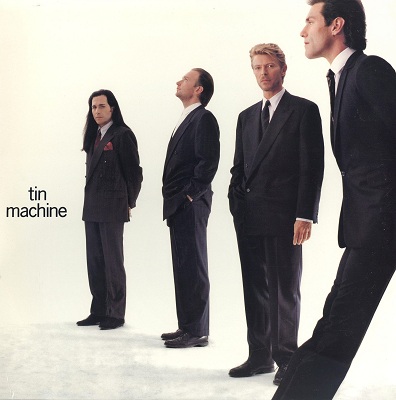
Similiraties between Nirvana's look and Tin Machine, was one stealing from the other? All band members wearing suits isn't the most left-field idea


APPLIED TO MUSIC VIDEO

Is music video the most intertextual medium?
Goodwin's six types of signifiers, linking to simulacra of Baudrillard

Music videos inspired by contemporary art, read here for some examples.


Goodwin later names these as different types of intertextuality within music video:

  • Social Criticism 
  • Self-Reflexive Parody
  • Parody
  • Pastiche
  • Promotion 
  • Homage


SEVEN TYPES OF INTERTEXTUALITY, can these all be applied towards music and the promo package?


CATEGORY I

The TV series The A-Word quoting King Lear but the character knowingly doing that and says it.
This category comprises specific books or texts mediated directly through the author. Revision, translation, quotation, allusion, sources, conventionally understood, an author's earlier work - all belong here. Largely the dynamic consists of authorial reading and remembering, though performances count too (as a kind of reading) and the memory may be subconscious rather than conscious and purposeful. Emrys Jones, for example, well demonstrated the shaping influence of Mystery Play cycles on Shakespeare's histories and tragedies. The evidence for textual transactions in Category I has largely been the identification of verbal iteration or echo (those endless and often disap- pointing lists of parallel passages) though there are verbal possibilities in matching concatenations as well, in lexical or imagistic patterns. There is also non-verbal evidence available in scenic form, rhetorical and stylistic figura- tion, and thematic articulation. 

Type 1: REVISION

...
This type of intertextuality features a close relationship between anterior and posterior texts, wherein the latter takes identity from the former, even as it departs from it. The process occurs under the guiding and explicitly comparative eye of the revising author. The revision may be prompted by external circumstance - censorship, or theatrical, legal, or material exigencies. Alternatively, the revision may simply reflect an author's subsequent wishes. The reviser who is not the author presents another scenario and an entirely different set of problems and considerations. In all cases, however, the transaction is linear, conscious, and specific, marked by evidence of the reviser's preference and intentionality.

Type 2: TRANSLATION

...
Translation transfers, 'carries across', a text into a different language, recreates it anew. The later text explicitly claims the identity of the original, its chief project an etiological journey to itself, or to a version of itself. Translations are generally grouped according to source language, and judged by standards of 'fidelity', i. e., the closeness of the rendering to the original and the success of the translator in representing the original's literary quality and effects.

Type 3: QUOTATION
...
Quotation literally reproduces the anterior text (whole or part) in a later text. (For general purposes of description, we may view textual allusions as a typesof quotation, in effect, quotation without verbal iteration, quotation asreference not re-enactment.) Quotations may be variously marked for reader recognition, by typographical signals, by a switch in language, for example, or by the actual identification of the original author or text:

Type 4: SOURCES
...
Source texts provide plot, character, idea, language, or style to later texts. The author's reading and remembering directs the transaction, which may include complicated strategies of imitatio. The source text in various ways shapes the later text, its content, or its rhetorical style and form.


CATEGORY II

Both of these can be applied to genre potentially
Category II contains traditions. An originary text radiates its presence through numberless intermediaries and indirect routes - through commentaries, adaptations, translations, and reifications in other works. It exists in combina- tion with other originary texts, largely as a set of inherited expectations, reflexes, and strategies. The source remote does not lie far off from the tradi- tions of Category II. But there is a real distinction between the direct influence of, say, a sixth-form Virgil passage, half-remembered many years later, and the indirect influence of traditions, in which the originary text may never have ever been read by the author at all. 

Type 5: CONVENTIONS + CONFIGURATIONS

Poets constantly appropriated and adapted numerous conventions from classical, medieval, and continental literatures, formal and rhetorical. Senecan conventions in tragedy, the chorus, messenger, domina-nutrix dialogue, sticho- mythia, and soliloquy, for example, have all attracted due attention. So have Plautine and Terentian conventions in comedy: eavesdropping, disguise, lock- outs, stock characters like the witty slave, bragging soldier, blocking senex, and so on.

Type 6: GENRE
...
Just like films will often refer to the archetype of a genre like Michael Myer's mask Category II intertextuality also includes the wide range of linkings implicit and explicit in generic choices. These may appear in individual signifiers (e.g., the play-within-the-play of revenge tragedy, the singing shepherds in pastoral), which function much like conventions, or range to broader and less discrete forms. On the far end of the spectrum often a sophistication and smoothness of adaptation makes difficult positive identification of origins.

CATEGORY III

Type 7: PARALOGUES
Can be compared to Barthes's cultural code.

Paralogues are texts that illuminate the intellectual, social, theological, or political meanings in other texts. Unlike texts or even traditions, paralogues move horizontally and analogically in discourses rather than in vertical lineation through the author's mind or intention. Today, critics can adduce any contemporary text in conjunction with another, without bothering at all about verbal echo, or even imprecise lines of filiation. In some ways the discussion of paralogues departs from past critical practices, bringing new free- dom; but, of course, new perils threaten: rampant and irresponsible association, facile cultural generalization, and anecdotal, impressionistic historicizing. Though some would not care to admit it, the practice of adducing paralogues
is not new. E. M. W. Tillyard's citations to Richard Hooker's Laws of Ecclesi- astical Polity and Dionysius the Areopagite's treatise on celestial hierarchies function intertextually as do post-structuralist citations of the hic mulier pamphlets as background to the gender play of early modern literature. The same holds true for modern uses of The Return of Martin Guerre, the rhetoric of Elizabeth or James I, or the documents of colonial discourse, though now moderns tend to see literary texts as contested sites, rather than as self- contained, discursively significant wholes.